
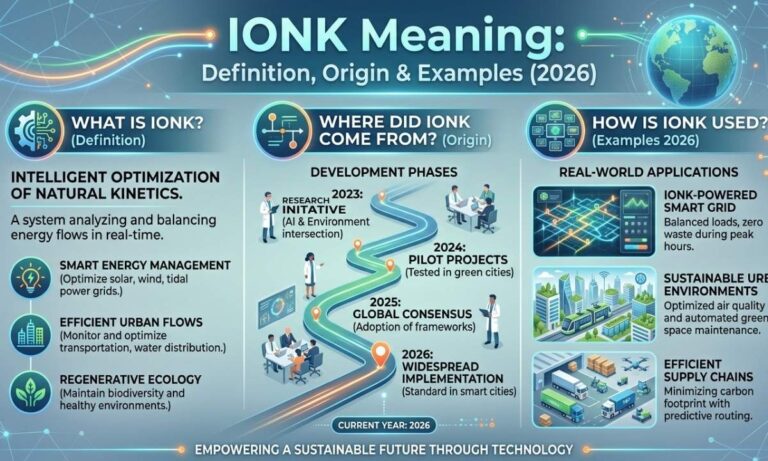
IONK meaning in text is simple: it stands for “I don’t know.” It’s a casual, trendy version of “IDK,” used in texts, DMs, and social media comments when someone is unsure or doesn’t want to commit to an answer.
If you’ve seen “ionk” pop up in a chat and felt confused, you’re not alone. This guide covers what IONK means, where it likely came from, how people use it, and how it differs from similar slang.
Texting slang moves fast. New abbreviations show up on TikTok, Snapchat, and Instagram before most people notice them. IONK is one of those terms. It looks strange at first, but once you know the meaning, it’s easy.
What Does IONK Mean in Text
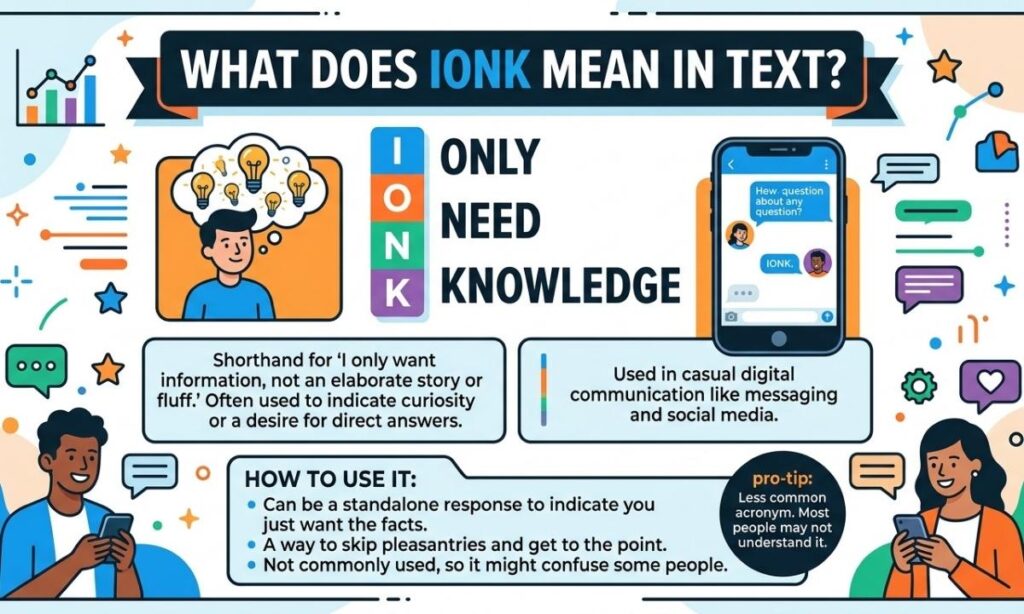
IONK stands for “I don’t know.” That’s the short answer.
It’s a casual, quicker feeling cousin of the classic “IDK.” People use it when they’re unsure, don’t have an answer, or just don’t want to commit to one.
You’ll usually see it in lowercase with no punctuation, like “ionk” or “ionk lol.”
The Definition of IONK
The core IONK meaning is an expression of uncertainty. It’s an acronym, not a real word, so spelling can vary slightly across chats.
| Term | Full Meaning | Tone |
|---|---|---|
| IONK | I don’t know | Casual, playful |
| IDK | I don’t know | Neutral, standard |
| Dunno | I don’t know | Spoken, informal |
| IONR | I need ranch | Joking, food-related |
IONK and IDK mean the same thing. The difference is tone: IONK feels more relaxed and trend-driven.
Some corners of the internet have suggested other expansions, like “I only now know,” but that isn’t the widely accepted meaning. The mainstream use is “I don’t know.”
IONK Meaning on Social Media
IONK shows up differently depending on the platform, but the meaning stays the same. Only the tone and emojis change.
- Texting apps: Quick one-on-one replies, often with minimal punctuation.
- Instagram and Snapchat: Captions, story replies, and DM threads.
- TikTok: Comment sections, usually replying to questions in videos.
- Group chats: Keeps the pace fast without overthinking a response.
Origins and History of IONK
Slang like IONK grew out of an older habit: shortening common phrases for faster typing. “IDK” has been around since the early instant messaging days. As texting culture moved to Gen Z platforms, phrases became more stylized.
IONK most likely started as a phonetic spin off. Say “I don’t know” quickly and it blurs into something like “ionk.” This style is common in modern slang because it mimics how people speak, not how they write formally.
There’s no confirmed first use, but the term seems to have spread through comment sections, group chats, and short form video captions, especially among younger users.
How to Use IONK in a Text
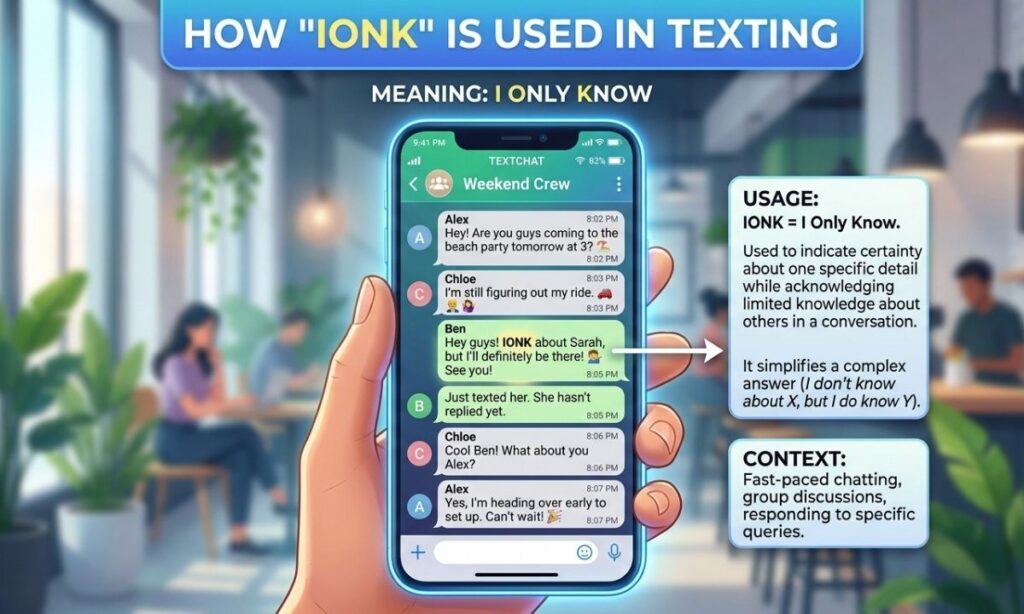
IONK works best in casual, low-stakes conversations. Avoid it in work emails or formal messages.
People typically use it when:
- Replying to a question they can’t answer
- Avoiding commitment to an opinion
- Keeping a conversation light and quick
- Responding to plans, gossip, or small talk
It usually appears at the start of a sentence, standing in for “I don’t know.” People often add emojis or other slang for tone:
- “ionk what to wear today 😭”
- “ionk, maybe later?”
- “ionk tbh, ask someone else”
The lowercase, no-punctuation style is part of the look. It signals informality on purpose.
IONK Examples in Conversations
Example 1
Friend: “Are you coming to the party tonight?”
You: “ionk yet, depends on my schedule”
Example 2
Group chat: “What time does the movie start?”
Reply: “ionk, let me check”
Example 3
Comment section: “Is this restaurant any good?”
Reply: “ionk, never been but heard good things”
In each case, IONK simply replaces “I don’t know” without changing the meaning.
IONK vs IDK and Similar Slang
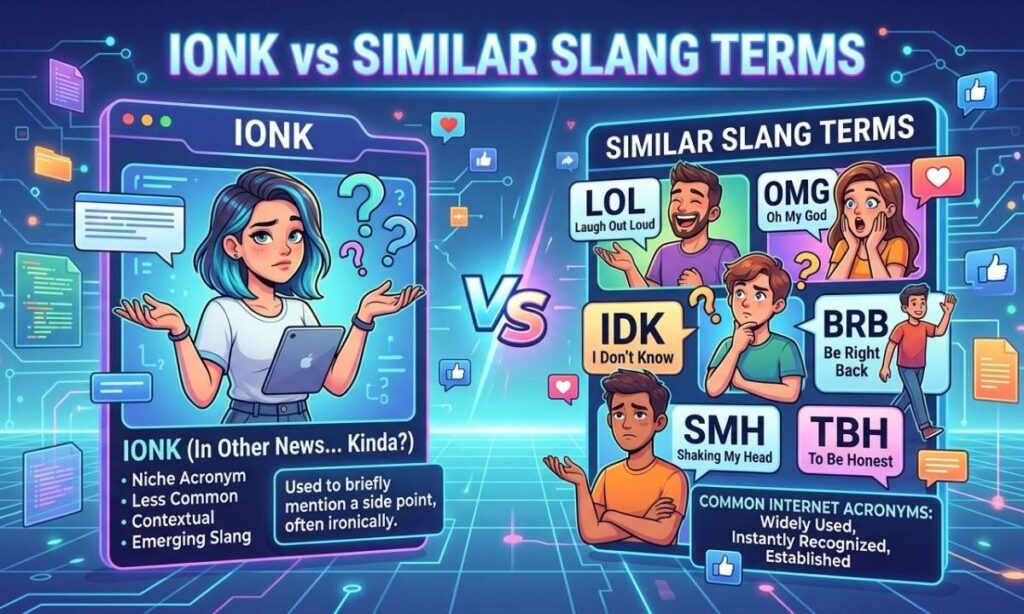
IONK isn’t the only way to express uncertainty online. Here’s how it compares:
| Slang | Meaning | Best Used For |
|---|---|---|
| IONK | I don’t know | Casual texting, DMs |
| IDK | I don’t know | General texting, more neutral |
| IDC | I don’t care | Showing indifference |
| AFAIK | As far as I know | Sharing partial knowledge |
| Dunno | I don’t know | Casual spoken or written tone |
IONK and IDK are nearly interchangeable. IONK just feels more modern, especially among Gen Z. For more slang comparisons, see
Also read this Ion Meaning Usage Examples
IONK on Different Platforms
IONK shows up differently depending on where you see it.
Texting and messaging apps: Used in quick one-on one replies, often with minimal punctuation.
Instagram and Snapchat: Common in captions, story replies, and DM threads.
TikTok: Frequently appears in comment sections responding to questions in videos.
Group chats: Used to keep the pace fast without overthinking a response.
Across all these platforms, the core IONK meaning stays the same. Only the surrounding tone and emojis change.
Why IONK Became Popular
- Speed of typing: Shorter forms save time on mobile keyboards.
- Phonetic appeal: It mimics natural speech, so texts feel conversational.
- Peer adoption: Once a few creators used it, it spread through comments and shares.
- Platform culture: Short-form video apps reward quick, punchy language.
Gen Z users are more likely to use IONK, while older generations tend to stick with IDK. This generational split is common with digital slang.
Common Misunderstandings About IONK
- Mistaken for a typo: Some readers assume it’s a mistyped word rather than intentional slang.
- Assumed to be offensive: It isn’t. IONK is harmless and only expresses uncertainty.
- Confused with IONR: IONR means “I need ranch,” a joking, food related term. It looks similar but means something completely different.
- Used in formal settings: IONK in a work email can come across as careless. Use full phrases there.
Conclusion
IONK meaning in text comes down to this: it’s a casual, trendy way to say “I don’t know.” It fits right into texting, social media comments, and quick group chat replies. It grew out of the same shorthand culture as IDK, with a more phonetic, Gen Z driven twist.
Now that you know what IONK means, where it likely came from, and how to use it, you won’t be caught off guard the next time it shows up in your messages.
Frequently Asked Questions
What does IONK mean in text?
IONK means “I don’t know.” It’s a casual slang abbreviation used in texting and on social media.
Is IONK the same as IDK?
Yes, both mean “I don’t know.” IONK just has a more casual, trendy tone.
Where did IONK come from?
IONK likely grew out of phonetic texting slang, mimicking how “I don’t know” sounds when said quickly.
Is IONK appropriate for professional messages?
No. Keep IONK for casual chats, DMs, and social media. Use full phrases in formal settings.
Is IONK offensive?
No. It’s a harmless slang term that only expresses uncertainty.
What does IONR mean?
IONR is a different, joking slang term meaning “I need ranch.” It’s unrelated to IONK.
Who uses IONK the most?
Gen Z and younger social media users, especially on TikTok, Snapchat, and Instagram.
What does IONK mean in text?
IONK means “I don’t know.” It’s a casual slang abbreviation used in texting and on social media.
Is IONK the same as IDK?
Yes, both mean “I don’t know.” IONK just has a more casual, trendy tone compared to IDK.
Where did IONK come from?
IONK grew out of phonetic texting slang, mimicking how “I don’t know” sounds when spoken quickly.
Is IONK appropriate for professional messages?
No. IONK is best kept for casual chats, DMs, and social media. Use full phrases in formal settings.
Is IONK offensive?
No. IONK is a harmless slang term. It only expresses uncertainty or a lack of an answer.
What does IONR mean?
IONR is a different, joking slang term meaning “I need ranch.” It’s unrelated to the IONK meaning.
Who uses IONK the most?
Gen Z and younger social media users use IONK most often, especially on TikTok, Snapchat, and Instagram.
1 thought on “IONK Meaning in Text: Best Definition, Origin Examples 2026”