
DP mean is one of the most searched slang questions on the internet today. If you have ever seen “DP” pop up in a chat and wondered what it means, you are not alone. This short, two-letter term shows up everywhere from Instagram comments to WhatsApp group chats. Understanding DP mean helps you use the term correctly and avoid any awkward mix-ups.
In this guide, we will break down every angle of this slang term, from its history to its everyday use. You will also learn about the less common (and more sensitive) meanings behind the term. By the end, you will never have to second-guess a “DP” text again.
What Does DP Mean?
DP mean, in the most common sense, is short for Display Picture. It is the small image tied to your profile on a social platform or messaging app.
Think of it as your digital face. It’s the photo people see next to your name when you comment, chat, or post. Once you understand DP mean, spotting it in any conversation becomes effortless.
Most of the time, when a friend says “nice DP,” they are simply complimenting your profile photo. The tone is friendly and casual.
DP Define
To define DP in one line: it is an acronym for Display Picture, sometimes also written as “display photo.” Some regions use it as a verb too, as in “you should DP that picture.”
It’s a term rooted in early internet culture. It has stayed relevant because it’s short, catchy, and easy to type.
What Does DP Stand For
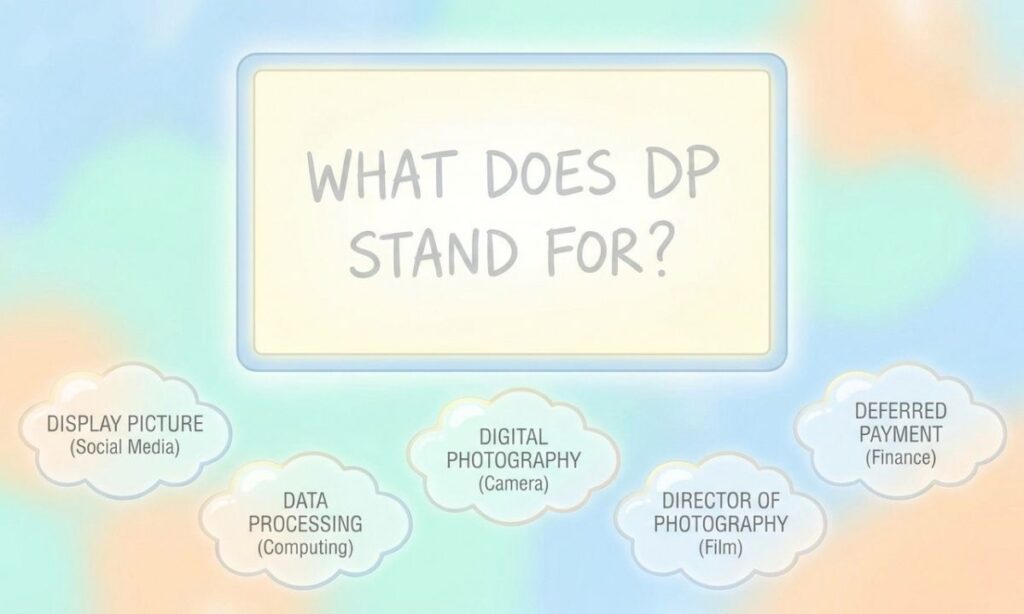
DP stands for Display Picture in almost every everyday context social media, texting, and messaging apps. It’s the standard meaning across platforms like WhatsApp, Instagram, and Facebook.
That said, DP can stand for other things depending on where you see it:
- Data Processing: used in tech and computing
- Displaced Person: used in humanitarian or historical contexts
- Double Play: used in baseball and softball
- Double Penetration: an adult slang term used in explicit contexts
So while “Display Picture” is the answer 95% of the time, context always matters when figuring out DP mean in a specific sentence.
Origin and History of “DP”
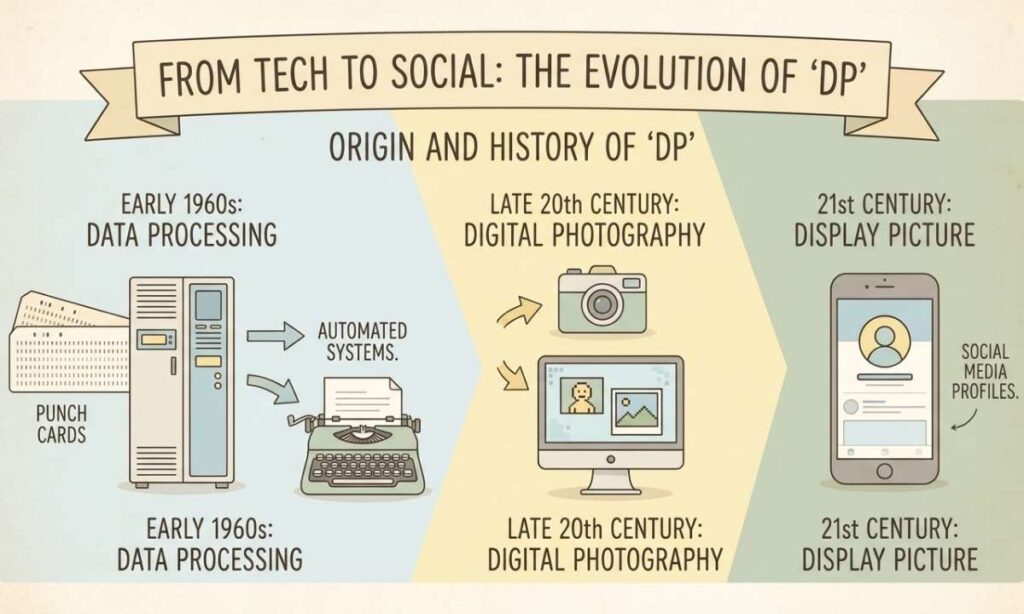
The story behind this term starts in the early 2000s. Instant messaging apps like MSN Messenger and BlackBerry Messenger (BBM) needed a quick way to describe the small photo next to a user’s name.
Users often typed messages on tiny keypads with no autocomplete. Every saved letter mattered, so long phrases got trimmed down fast.
Typing “display picture” every time was slow, especially on old phone keypads. So users shortened it to “DP.” The abbreviation stuck.
Before display pictures became common, people used avatars, cartoon icons or generic images instead of real photos. As internet speeds improved and cameras got better, real photos took over.
Facebook later popularized the term “profile picture,” which is why American users often say “PFP” instead. But in the UK, India, and much of South and Southeast Asia, “DP” remained the dominant term.
Today, this abbreviation is a fully established part of global internet slang, especially in messaging apps that focus on real time chat.
It has outlived the very apps that popularized it. BBM shut down years ago, yet the term it helped spread is still going strong.
How “DP” Is Used on Different Platforms
Each social platform has its own flavor of how people use this term in conversation. Here’s a quick breakdown.
| Platform | Common Use | Example |
| Talking about a new profile photo | “Your new DP is fire!” | |
| Asking to see or change a photo | “Check my new DP.” | |
| TikTok | Complimenting a creator’s photo | “Where was your DP taken?” |
| Discord | Discussing avatars or icons | “Cool DP, is that anime?” |
| Twitter/X | Referring to a profile icon | “Change your DP already!” |
On Instagram and Facebook, DP mean usually relates to a full profile photo. On Discord, it often refers to smaller, sometimes animated icons.
WhatsApp is where the term feels most natural, since the app itself calls it a “display picture” in its settings menu.
Facebook, on the other hand, officially labels it “profile picture.” That’s why American users tend to say PFP instead of DP.
DP in Texting vs. Real Life
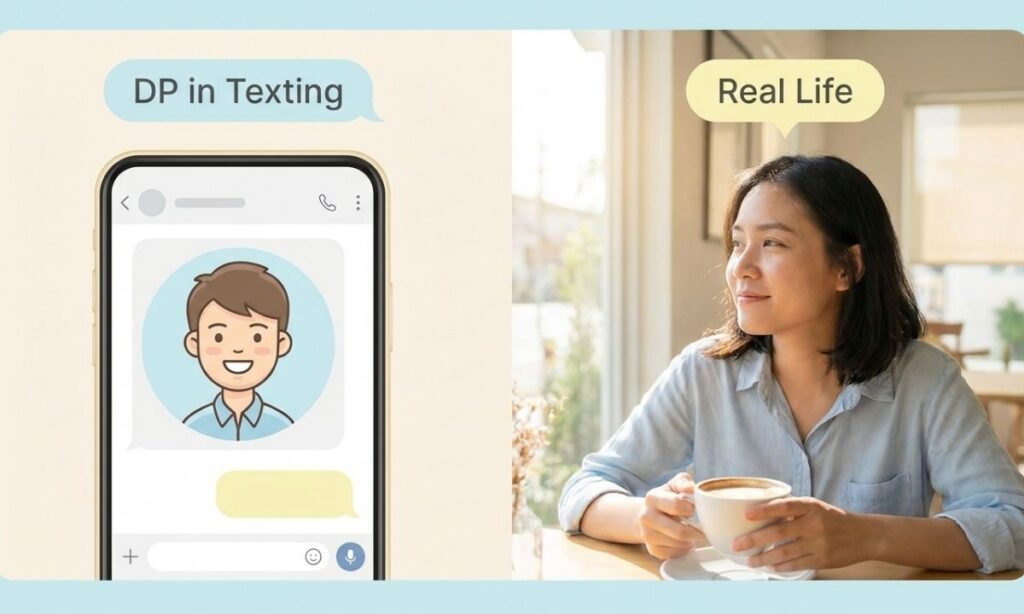
This term works differently depending on whether you’re texting or speaking out loud.
In texting:
- It’s fast and efficient.
- It saves keystrokes compared to “profile picture.”
- It fits naturally into casual chat.
In real life:
- People rarely say “DP” out loud.
- Saying it in person can sound stiff or overly technical.
- Most people just say “profile picture” or “profile pic” face-to-face.
If you’re texting a friend, “DP” flows naturally. If you’re talking in person, it might come across as unusual unless you’re both deep into internet culture.
Some younger users do say it out loud, especially in gaming or streaming circles. But it’s still far more common in written chat than spoken conversation.
Examples of “DP” in Sentences
Seeing the term in action makes it easier to understand. Here are some real-world style examples, grouped by tone.
Friendly and Casual
- “I love your new DP, you look great!”
- “You should make that beach photo your DP.”
Playful and Sarcastic
- “My DP is a potato right now, don’t judge.”
- “Did you take your DP with a flip phone?”
Direct and Practical
- “Check my new DP and tell me what you think.”
- “Why did you change your DP again?”
Caption or Online Use
- “New DP alert! Link in bio.”
- “When your friend’s DP is better than yours.”
Variations and Related Slang
This isn’t the only term used for this idea. A few close cousins exist, and knowing them helps you sound fluent online.
| Term | Meaning | Relation to DP |
| PFP | Profile Picture | Same meaning, more common in the US |
| Avatar | Digital character or icon | Common in gaming and forums |
| Icon | Small profile image | Often used on Twitter/X |
| Pic | General term for photo | Broader, not profile-specific |
PFP is the most direct alternative to DP. Both terms describe the exact same thing your main profile image.
Regional habits decide which term wins. American users lean toward PFP, while UK, Indian, and Southeast Asian users often stick with DP.
Gamers and forum users, meanwhile, are more likely to say “avatar,” especially when the image is a custom character rather than a real photo.
Is “DP” Safe for Kids?
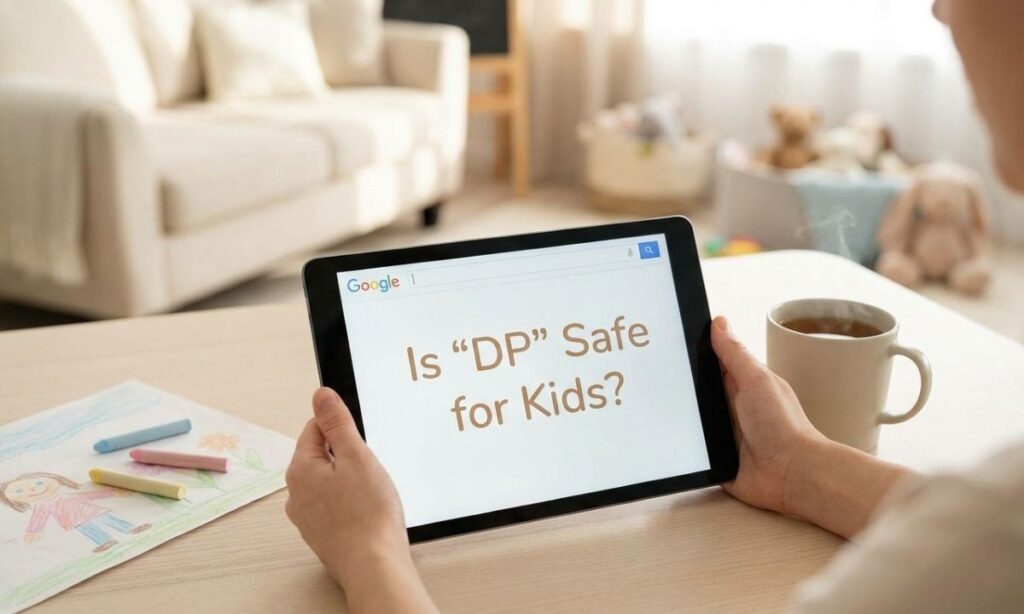
In everyday social media use, this slang term is completely safe. Kids commonly use it to talk about their profile photos on family-friendly apps.
Teachers and parents won’t find anything alarming about the term when it’s used in this context. It’s simply digital shorthand.
However, there’s a catch. On unfiltered or adult websites, “DP” can carry a graphic sexual meaning tied to explicit content.
Parents should be aware of this dual meaning, especially if a child searches “DP” without safe-search filters turned on. The everyday social media use remains harmless, but context on the open web can shift quickly.
A simple rule helps here: on WhatsApp, Instagram, or school approved apps, the word is safe. On unfiltered search engines or forums, it may not be.
When to Use (and Avoid) “DP”
Knowing when this term fits the moment keeps your messages sounding natural, not awkward.
Use it when:
- You’re chatting casually on WhatsApp, Instagram, or Discord.
- You want to compliment someone’s new profile photo.
- You’re texting friends who understand internet slang.
- You want a quick, informal way to refer to a profile image.
Avoid it when:
- You’re writing a formal email to a boss, client, or teacher.
- You’re speaking in a professional meeting or interview.
- You’re chatting with someone unfamiliar with social media slang.
- You’re in an unfamiliar online space where the term’s meaning could be misread.
When in doubt, “profile picture” is always the safer, more universally understood phrase.
Reading the room matters too. A close friend group will understand slang instantly, but a mixed audience of different ages might not.
Common Mistakes People Make With DP
Even a simple term like this can trip people up. Here are a few mistakes worth avoiding.
- Using it in formal writing: Resumes, cover letters, and official emails should stick to “profile picture.”
- Assuming everyone knows it: Older relatives or coworkers unfamiliar with slang may need the full phrase instead.
- Ignoring the adult meaning: Typing “DP” into an unfiltered search bar can bring up unexpected, explicit results.
- Overusing it in captions: A little slang goes a long way; too much can feel forced.
Being aware of these small pitfalls keeps your online communication clear and appropriate for the audience, no matter how well you know DP mean.
Frequently Asked Questions
What does DP mean on social media?
On social media, DP mean refers to Display Picture the photo shown next to your username or profile.
Is DP the same as PFP?
Yes. DP (Display Picture) and PFP (Profile Picture) describe the exact same thing, just with different regional preferences.
Why do people say DP instead of profile picture?
DP is faster to type and has been used since the early days of instant messaging, making it a lasting habit among internet users.
Does DP always mean display picture?
No. Depending on context, DP can also mean data processing, displaced person, double play, or an adult slang term.
Is it okay to use DP in a formal setting?
It’s better to avoid it. “DP” fits casual chats well, but formal writing or speech calls for “profile picture” instead.
How do I choose a good DP?
Pick a clear, well lit photo that represents your personality. High resolution images that crop well into a circle usually work best.
Conclusion
DP mean comes down to one simple idea: it’s your Display Picture, the image that represents you online. It started as internet shorthand and has become a permanent part of digital conversation.
Most of the time, DP mean is friendly, casual, and completely harmless. Just remember that context matters, especially outside mainstream social apps.
Now that you know the full story behind DP mean, you can use it confidently, whether you’re complimenting a friend or updating your own profile photo.
1 thought on “What Does DP Mean in Slang? Easy Guide & Key Facts”