
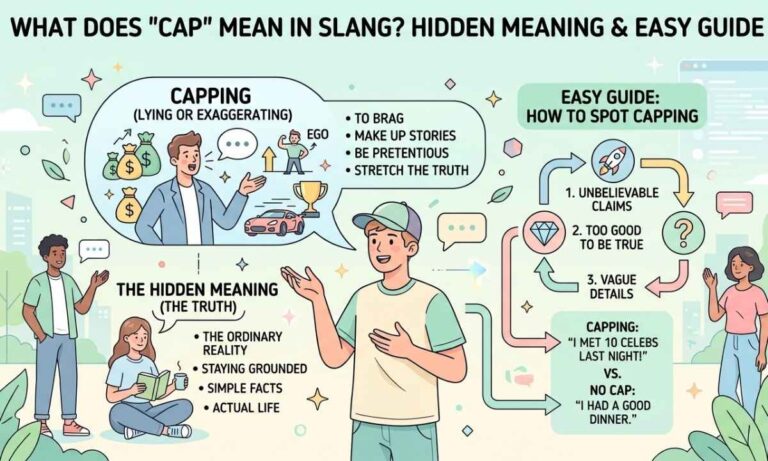
Cap mean lying, exaggerating, or saying something that just isn’t true. If a friend hits you with “cap 🧢” after your story, they’re not confused they’re calling you out.
This tiny word is everywhere right now, from TikTok comments to group chats, and once you understand the cap mean behind it, you’ll never miss the tone again.
In this guide, you’ll learn exactly what cap means, where it came from, and how to use it (or avoid it) in real life.
What Does Cap Mean?
Quick answer: Cap mean a lie, a fake claim, or an exaggeration. “No cap” means the opposite someone is being 100% honest.
If someone says “that’s cap,” they think you’re lying. If they say “no cap,” they’re promising they’re not.
The 🧢 emoji works the same way. Drop it under a post, and you’re silently saying “I don’t believe this.”
Context changes the tone a lot. Between close friends, cap is usually playful. In an online argument, it can feel like a real accusation.
Here’s a simple way to remember the cap mean rule:
- Cap: lie, fake, exaggeration
- No cap: truth, for real, I’m serious
- Capping: the act of lying or bragging
- Capped: past tense, already lied or exaggerated
Cap Slang Drug Is There a Drug Meaning?
Some people search for “cap slang drug” after seeing the word online. In most everyday slang, cap has nothing to do with drugs it’s about honesty.
The confusion sometimes comes from “capsule” or pill culture, where “cap” is shorthand for a capsule. That’s a completely different, much older usage and isn’t connected to the “lying” meaning at all.
If you see “cap” in a text from a teenager, it almost always means lie or exaggeration, not anything drug-related.
Cap Mean in Slang, Urban Dictionary
Urban Dictionary lists several definitions for cap, since anyone can submit an entry. The most common and widely accepted one is still “a lie or untruthful statement.”
A few older, unrelated, or vulgar entries also exist on crowdsourced slang sites. Those definitions aren’t the mainstream usage and aren’t what you’ll see in everyday texting, gaming, or social media.
Stick with the top definition lying or exaggerating and you’ll understand 99% of how the word gets used online.
What Does Cap Mean on TikTok?
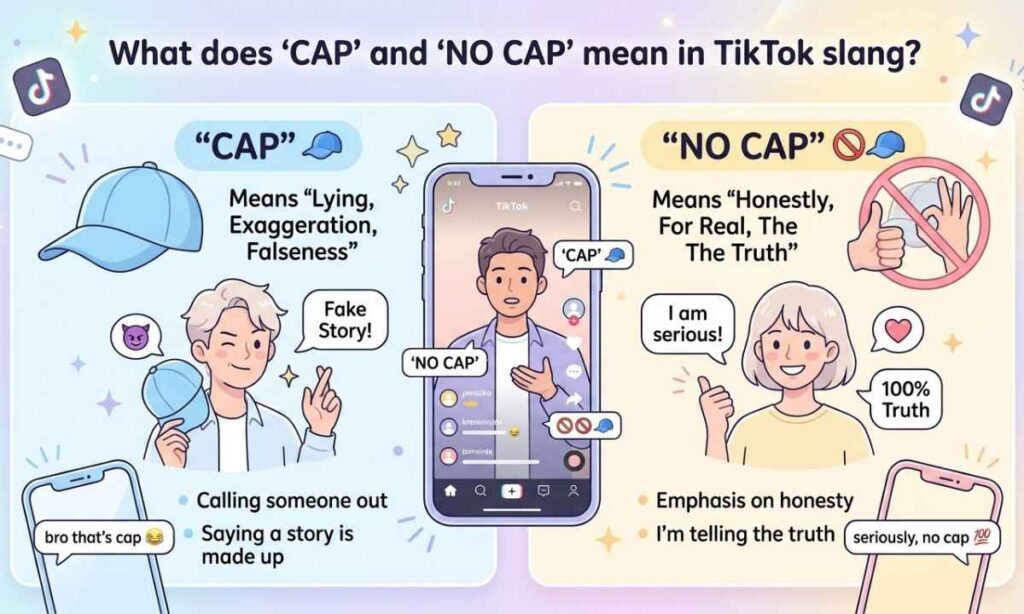
On TikTok, cap shows up constantly in the comments of storytime videos. If a creator’s story sounds too wild, viewers flood the section with 🧢.
Creators also say “no cap” before sharing something unbelievable but true, almost like a disclaimer that the story is real.
“I Had a Cap” What Does That Mean?
“I had a cap” isn’t a standard phrase in this slang it’s more likely a typo or mishearing of “that’s cap” or “he had a cap moment.” If someone said it to you, ask for context, since it doesn’t match the common usage pattern.
Cap Slang Example
A quick real-world example: your friend says he ran a mile in six minutes flat. You reply, “Cap.” You’re telling him you don’t buy it.
Flip it: he says “No cap, I actually did it,” and now he’s insisting it’s true.
Origin and History of “Cap”
Cap mean didn’t start on social media its roots go back much further.
The term comes from African American Vernacular English (AAVE). Language researchers trace “capping,” meaning bragging or showing off, back to at least the early 1900s.
Over the decades, capping shifted from just bragging to calling out lies directly. Hip-hop culture kept the phrase alive for generations.
In the 2010s, rappers like Future and Young Thug pushed “no cap” into wider view, including their 2017 track titled “No Cap.” That song helped the phrase cross over into mainstream youth culture.
By 2018 and 2019, cap exploded across TikTok, Twitter, and Instagram. The 🧢 emoji became a fast, visual way to say the same thing without typing a word.
The core meaning has stayed remarkably consistent. What changed is the audience a term rooted in Black American culture is now used by people of every background online.
How “Cap” Is Used on Different Platforms
Different apps give cap slightly different energy. Here’s a quick breakdown.
| Platform | Common Use | Typical Tone |
| TikTok | Reacting to storytime videos | Playful to skeptical |
| Captions and DM reactions | Casual, teasing | |
| Twitter/X | Disputing claims or takes | Direct, sometimes sharp |
| Snapchat | Friend group banter | Light and joking |
| Discord/Gaming | Calling out bragging | Competitive trash talk |
| Reacting to dramatic stories | Occasional, skeptical |
TikTok: Storytime creators get hit with “that’s cap” the moment a detail sounds exaggerated. “No cap” often opens a caption to signal the story is real.
Instagram: People use cap in captions for emphasis, like “woke up like this, no cap.” Story replies often just use the 🧢 emoji.
Twitter/X: A quote tweet that simply says “cap” is a fast, blunt way to dispute someone’s claim.
Snapchat: Friends call each other out for streaks and stories. If you say you’re staying home but post from a party, expect “you’re cappin” in your DMs.
Discord and gaming chats: Bragging about a clutch play often gets met with “cap until proven” it’s part of the trash talk culture in lobbies.
Cap in Texting vs. Real Life
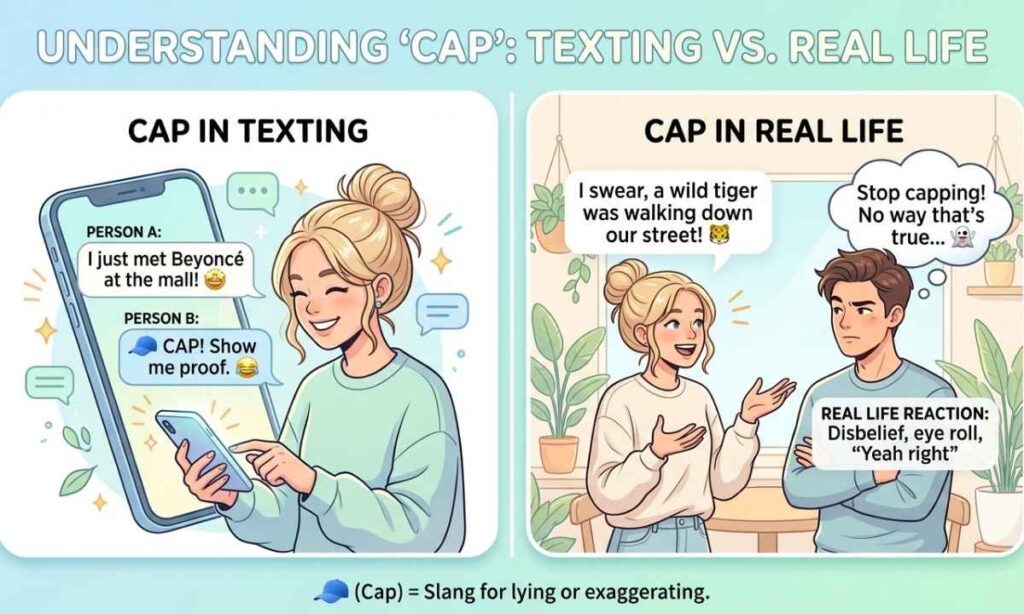
Cap works just as naturally spoken out loud as it does typed.
“That’s cap” rolls off the tongue in normal conversation. “No cap” often comes right before or after a serious point, almost like saying “seriously” or “for real.”
Spoken delivery adds extra flavor. A drawn-out “caaaap” sounds far more dramatic than a flat, quick “cap.”
One real difference: the 🧢 emoji only exists in text. In person, tone of voice and facial expression carry that same meaning instead.
Examples of “Cap” in Sentences
Friendly and casual
- “You finished that whole pizza? Cap.”
- “No cap, that was the best concert I’ve ever been to.”
- “She said she’s not coming to the party. That’s cap, she always says that.”
Romantic or flirty
- “You’re the prettiest person here, no cap.”
- “When you said you weren’t into me at first, was that cap?”
Sarcastic or humorous
- “I’m going to the gym every day starting tomorrow.” Cap. You said that last month.”
- “This is the last slice, I promise.” Biggest cap of the night.”
Online and captions
- “Just got promoted 🎉 hard work pays off, no cap.”
- “Y’all really believe this story? 🧢🧢🧢”
Variations and Related Slang
Cap shows up in a few different forms depending on how it’s used in a sentence.
- Cap: the standard, most common form
- Capping: the verb form, “you’re capping”
- Capped: past tense, “he capped so hard”
- No cap: used to emphasize honesty
- 🧢: the emoji shorthand for cap
A handful of related slang terms often travel alongside cap:
| Term | Meaning | How It Relates |
| No cap | For real, honestly | Opposite of cap |
| Sus | Suspicious or sketchy | Often leads to calling something cap |
| Based | Authentic, unapologetic | Different concept, sometimes paired |
| NGL | Not gonna lie | Similar honesty marker |
| Mid | Average or mediocre | Unrelated topic, same slang family |
Is “Cap” Safe for Kids?
Yes, cap is generally safe for kids to use and hear.
The word carries no profanity and no hidden inappropriate meaning in its common usage. It simply means lying or being honest.
One small thing to watch: repeatedly calling classmates liars, even jokingly, can come across as rude. The word itself isn’t harmful, but tone and repetition matter.
Most teachers won’t flag cap as inappropriate language, since it’s just informal slang. Some adults may simply not recognize it yet.
If your child uses it often, ask them to explain it. Most kids enjoy teaching parents new slang, and it’s a low-stakes way to stay connected to how they talk.
When to Use (and Avoid) “Cap”
Good times to use it:
- Joking around with friends who already know the term
- Emphasizing you’re being fully honest (“no cap”)
- Teasing someone whose story sounds exaggerated
- Casual social media posts and captions
Times to avoid it:
- Professional settings like work emails or interviews
- Conversations with older adults unfamiliar with the term
- Situations where calling someone a liar could genuinely hurt them
- Serious conflicts where the accusation isn’t playful
Frequently Asked Questions
What does cap mean when someone texts it?
It means they think you’re lying or exaggerating. The 🧢 emoji sends the same message without typing a word.
Is “no cap” the same as saying “seriously”?
Yes. No cap emphasizes total honesty, similar to saying “for real” or “I swear.”
Where did cap slang come from?
Cap mean traces back to African American Vernacular English (AAVE), later spread through hip-hop in the 2010s, then went mainstream via TikTok.
Can I use cap in professional settings?
No, it’s casual slang best kept for texts, social media, and conversations with friends.
Why do people use the 🧢 emoji instead of typing cap?
It’s faster, visual, and hits harder in comment sections, especially when several people post it at once.
Is cap slang connected to drugs?
Not directly. The everyday cap mean is about lying or honesty, not substances any drug-related use is a separate, much less common meaning.
Conclusion
So, what does cap mean? At its core, cap mean a lie or exaggeration, and no cap means someone’s telling the truth. That’s the whole idea in one line.
This slang connects people through shared language. Saying “no cap” and getting a nod back signals you’re on the same page, culturally and conversationally.
Slang like this carries real history, rooted in Black American culture long before it went viral. Understanding the cap mean behind the word helps you use it right and helps you finally understand your group chat.
2 thoughts on “What Does Cap Mean in Slang? Hidden Meaning & Easy Guide ”