
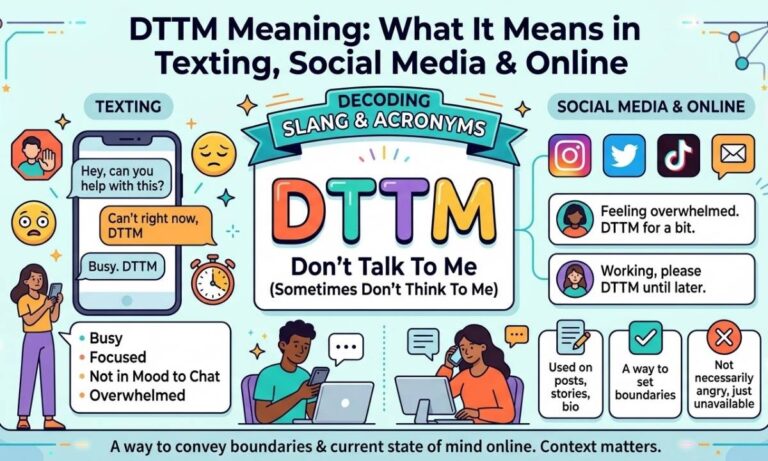
DTTM meaning is one of those things you Google the second you see it and have no clue what’s going on. You’re mid-scroll, someone drops “DTTM” in a reply, and suddenly you’re stuck.
Good news: it’s not complicated once you know it. Most of the time, DTTM means “Don’t Talk To Me.” But that’s not the whole story.
This guide breaks down every angle slang, apps, history, psychology, even the tech world’s version. By the end, you’ll never second-guess it again.
What Does DTTM Mean in Slang
In casual slang, the DTTM meaning boils down to “Don’t Talk To Me.” It’s a quick way to signal you’re not in the mood for a conversation right now.
People use it when they’re stressed, annoyed, or just done with a topic. It’s blunt, but it’s rarely meant to be cruel.
Tone matters a lot here. A DTTM with a laughing emoji reads completely different from a DTTM sent with no punctuation at all.
What Does DTTM Mean on Instagram
On Instagram, DTTM pops up in comments, story replies, and DMs. It usually works the same way it does in texts.
Someone might comment “DTTM” under a post about a bad day, meaning “don’t even get me started.” Other times it shows up in a reply thread when a user wants to shut down a topic fast.
Instagram culture leans playful, so DTTM here often reads more dramatic than genuinely upset.
The Main Meaning Everyone Uses: Don’t Talk to Me
Across every platform, one meaning wins by a landslide. DTTM means “Don’t Talk To Me,” full stop.
It’s the go-to choice when someone needs space, wants to end a topic, or is simply overwhelmed. Think of it as a soft boundary — not always a hard wall.
Here’s the simple breakdown:
- Playful use: joking about being “done” with something small
- Stress use: signaling a bad day without explaining why
- Boundary use: genuinely asking for space or quiet
Knowing which one you’re dealing with usually comes down to context and emoji.
How DTTM Shows Up in Different Apps and Platforms
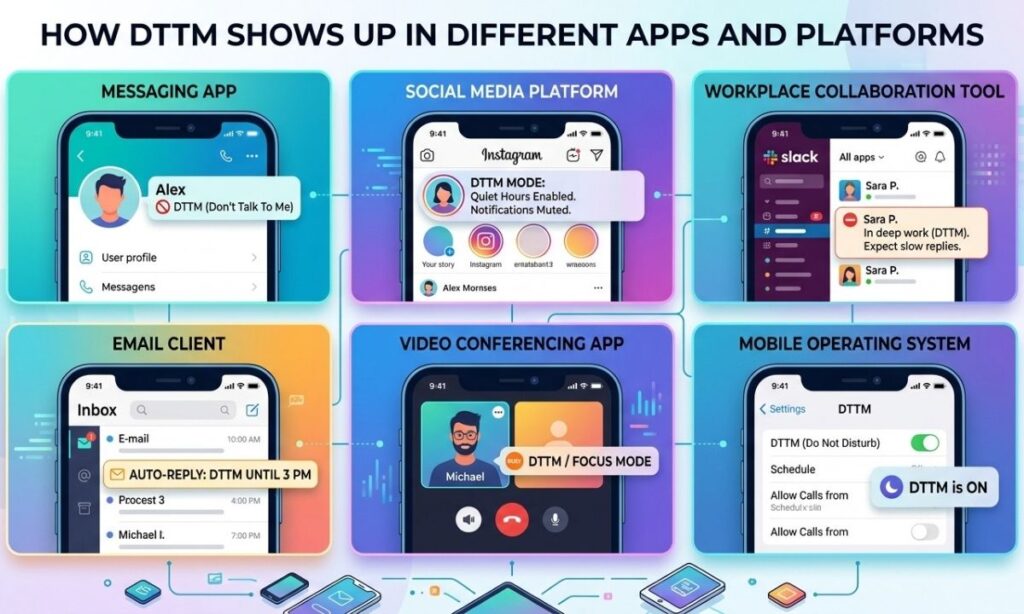
The DTTM meaning doesn’t behave the same way on every app. The platform changes the tone.
| Platform | Common Use | Typical Vibe |
|---|---|---|
| Comments, DMs, story replies | Playful or dramatic | |
| Snapchat | Quick chat replies | Casual, fast |
| TikTok | Comment sections | Exaggerated, humorous |
| Private and group chats | Can be serious or joking | |
| Discord | Server chats | Friendly teasing |
On TikTok, DTTM often pairs with other slang like OMG or SMH to boost the drama. On WhatsApp, it leans more serious, especially in one-on-one chats.
Where Did DTTM Actually Come From? A Quick Trip Through Texting History
Nobody marks the exact birthday of DTTM. Like most internet slang, it grew out of a need to type less and say more.
As SMS gave way to apps like WhatsApp and Snapchat, abbreviations exploded. LOL, BRB, and SMH paved the way, and DTTM followed the same shortcut logic.
It picked up steam in younger, fast-moving chat communities before spreading to mainstream texting. It’s not as universal as LOL, but it’s firmly part of everyday slang now.
Other Meanings That Surprise People: Not Just Slang
DTTM meaning isn’t locked to one definition. A few lesser-known versions show up depending on where you see it.
- Don’t Text The Mobile: used to avoid contact on a specific number, often during a meeting or drive
- Date Time: a timestamp label used in databases and tech documents
- Doing Too Much: an alternate slang read, meaning someone is overreacting or overdoing it
These rarer meanings depend heavily on context. In a group chat, it’s slang. In a spreadsheet, it’s a data field.
Real-Life Scenarios and How People Actually Use DTTM Every Day

Seeing the DTTM meaning in action makes it click faster than any definition. Here are common examples:
- “You ate the whole pizza? DTTM 😂” playful, not serious
- “So many deadlines this week. DTTM.” venting, not anger
- “You didn’t invite me? DTTM 😒” mild, joking annoyance
- “I need space right now. DTTM for a bit.” this one’s genuine
Notice how emojis and punctuation shift the meaning every time. The words stay the same, but the feeling changes completely.
The Psychology Behind Dropping a DTTM
There’s more going on than a simple abbreviation. The DTTM meaning often works as a small emotional release valve.
Typing four letters is easier than explaining a bad day in full. It sets a boundary without demanding a long conversation about feelings.
Psychologists note that short, blunt phrases like this let people protect their energy in digital spaces. It’s less about pushing someone away and more about managing overload.
How to Reply When Someone Hits You With DTTM (Without Making It Worse)
Getting a DTTM can feel confusing if you don’t know the sender well. Here’s how to handle it without escalating things.
- Pause before replying. Don’t fire back another message right away.
- Read the tone. Emoji or no emoji changes everything.
- Give space if it seems serious. A simple “okay, here when you’re ready” works well.
- Match the energy if it’s playful. A laughing reply is fine if they clearly meant it as a joke.
Respecting a genuine DTTM matters. Pushing past it usually makes the person shut down further.
Similar Slang and How DTTM Stacks Up Against Them
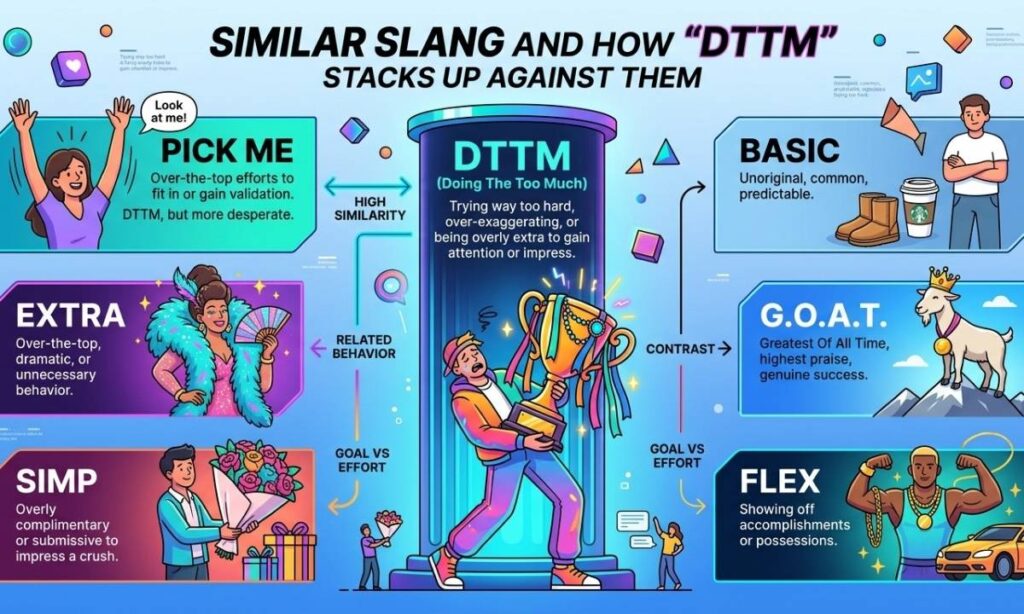
The DTTM meaning isn’t the only boundary-setting abbreviation floating around chats. Here’s how it compares.
| Slang | Full Meaning | How It Differs From DTTM |
|---|---|---|
| DTM | Don’t Text Me | Firmer, feels more final |
| BRB | Be Right Back | Promises a quick return |
| IDK | I Don’t Know | Neutral, shows uncertainty |
| SMH | Shaking My Head | Shows disbelief, not a boundary |
| FML | F My Life | Expresses frustration, not silence |
DTTM sits in the middle. It’s more direct than SMH but less final than DTM or a flat “leave me alone.”
DTTM in Relationships, Friendships, and Even Pop Culture
Among friends, DTTM often flies around as a joke after teasing. It rarely means anything serious in that setting.
In relationships, it can carry more weight. A partner saying DTTM after an argument usually needs a beat before talking things through.
Pop culture has picked it up too, especially in captions and comment sections where dramatic, exaggerated slang gets more engagement.
Global Twists and Cultural Takes
English-speaking chat communities use DTTM the most, but it’s spread well beyond that. Non-native speakers often pick it up through TikTok and Instagram trends.
Some regions treat it as harsher than others, since directness reads differently depending on local texting culture. When in doubt, softer emoji use tends to translate the friendly version everywhere.
Technical and Professional Sides: When DTTM Means Something Else Entirely
Outside of slang, DTTM meaning shifts into serious territory. In tech and data fields, DTTM commonly stands for “Date Time,” used as a field label in databases.
It shows up in system logs, spreadsheets, and healthcare records where accurate timestamps matter for tracking events. In that world, there’s nothing casual about it.
Professionals in IT or data entry may never encounter the slang meaning at all. Context, again, decides everything.
Fun Facts and Little-Known Bits About DTTM
- DTTM has at least three unrelated meanings depending on the setting.
- It’s more common in comment sections than direct messages.
- Emoji pairing is what mostly decides whether it reads as a joke or a boundary.
- It’s newer than classics like LOL or BRB, gaining traction mainly through short-form video platforms.
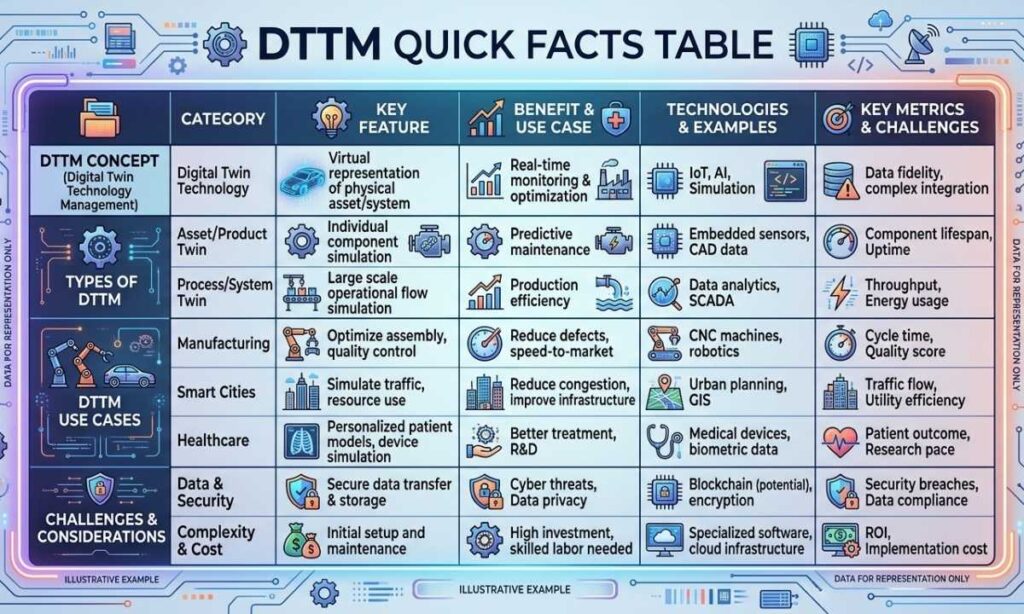
DTTM Quick Facts Table
| Category | Detail |
|---|---|
| Most common meaning | Don’t Talk To Me |
| Alternate slang meaning | Doing Too Much |
| Technical meaning | Date Time |
| Rare meaning | Don’t Text The Mobile |
| Common platforms | Instagram, TikTok, Snapchat, WhatsApp |
| Tone range | Playful to serious |
| First popularized | Short-form video and chat communities |
When to Skip DTTM and What to Say Instead
DTTM isn’t always the right call, especially in professional or unfamiliar chats. It can read as cold if the other person doesn’t know the slang.
Try these alternatives when you want to soften the message:
- “Can we talk about this later?”
- “I need a minute, I’ll circle back.”
- “Not the best time for this topic.”
These say the same thing without the risk of sounding harsh to someone unfamiliar with texting shorthand.
The Future of DTTM and Texting Slang
Voice notes and quick-reaction emojis are changing how people communicate online. Still, the DTTM meaning isn’t going away anytime soon.
It fills a gap that a single emoji can’t always cover. Expect newer generations to remix it, but the core idea of asking for space digitally will stick around.
Wrapping It All Up
DTTM meaning comes down to one simple idea most of the time: give me space. Whether it’s a joke between friends or a real boundary, reading the tone is everything.
Once you understand how DTTM shifts across apps, relationships, and even tech documents, you’ll never be confused by those four letters again. Use it thoughtfully, and respect it when someone sends it your way.
FAQs
What does DTTM mean in a text message?
DTTM meaning in texts is almost always “Don’t Talk To Me.” It’s a fast way to ask for space or end a topic.
Is DTTM always rude?
No. With friends and the right emoji, it usually reads as playful. It only feels rude when sent bluntly with no context.
Does DTTM mean something else besides Don’t Talk To Me?
Yes. It can mean “Date Time” in tech settings, “Don’t Text The Mobile” in rare cases, or “Doing Too Much” as alternate slang.
How should I reply to a DTTM text?
Give the person space if it seems serious, or match their playful tone if it’s clearly a joke. Reading the context first avoids awkward replies.
Is DTTM common on all social media platforms?
It’s most common on Instagram, TikTok, Snapchat, and WhatsApp. Usage and tone shift slightly depending on the app.