
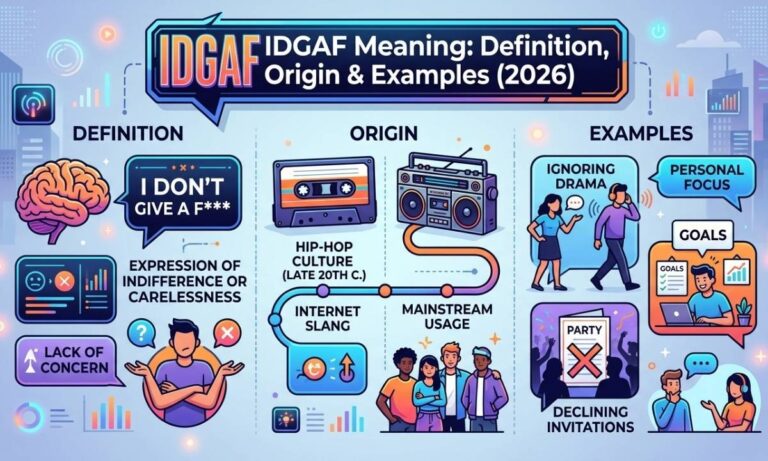
IDGAF meaning is simple: it stands for “I Don’t Give A F***.” People use it to show they don’t care about something. You’ll see it in texts, captions, and comments every single day.
If you’ve spotted IDGAF online and wondered what it means, you’re not alone. It’s one of the most searched slang terms on the internet.
This guide breaks down everything about IDGAF. You’ll learn its meaning, history, and how to use it the right way in 2026.
Also Read this Related Post: Sybau Meaning
What Is the Meaning of IDGAF?
IDGAF is short for “I don’t give a f***.” It’s a blunt way to say you don’t care.
People use it when they want to shut down an opinion. Or when they want to show confidence about a choice.
The phrase carries an edge because of the swear word. That’s what makes IDGAF meaning feel raw and honest, not polite.
You’ll mostly find it in casual texts, social captions, and song titles. It’s rarely used in formal writing.
Understanding the Meaning of IDGAF
At its core, IDGAF meaning is about indifference. It tells someone their opinion won’t change your mind.
But it’s not always negative. Many people use it to express self-confidence too.
For example, someone might post a bold outfit photo with the caption “IDGAF.” Here, it means “I’m doing what makes me happy, no matter what others think.”
So context really shapes how it comes across. It can sound dismissive, funny, or empowering, depending on the situation.
Breaking Down the Acronym: What IDGAF Really Stands For
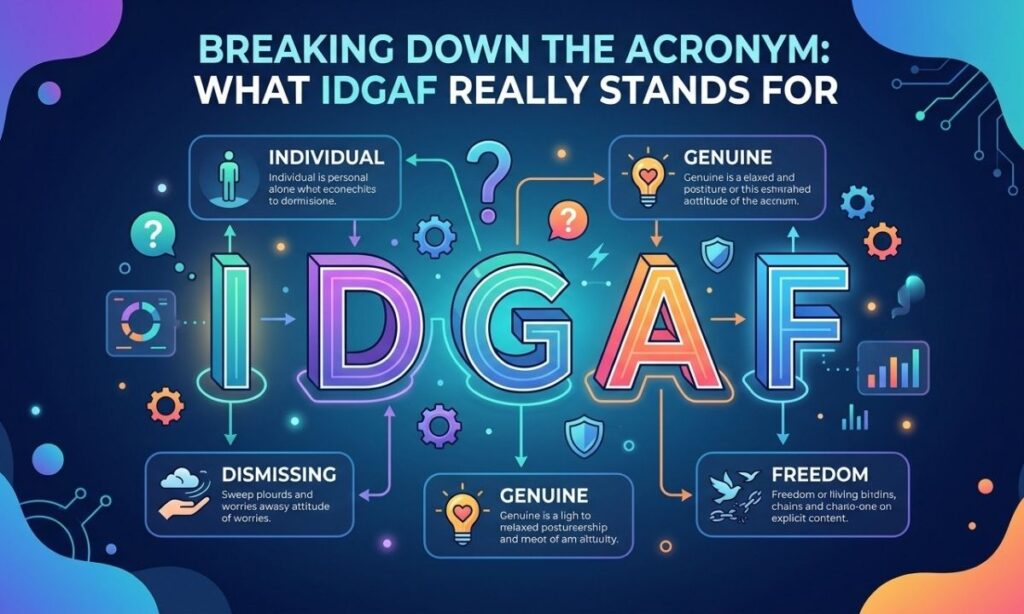
IDGAF stands for “I Don’t Give A F***.” Each letter maps to one word in that sentence.
Here’s a quick breakdown:
| Letter | Word |
|---|---|
| I | I |
| D | Don’t |
| G | Give |
| A | A |
| F | F*** |
Some people drop the “I” and write DGAF instead. Both versions carry the same meaning.
You’ll also see softer spin-offs like IDC (“I don’t care”). These exist for people who want the same message without the profanity.
Because of the strong language, IDGAF meaning works best among friends. It’s not something you’d type in a work email.
The Origins and History of IDGAF
The root phrase “I don’t give a f***” isn’t new. It’s been part of casual English speech for decades.
You can trace similar expressions back to mid-20th century slang. Films, books, and everyday conversation used it to show rebellion or apathy.
The acronym form came later, with the rise of internet chat culture. Early texting and instant messaging favored short, quick phrases.
Abbreviations like this one let people type fast on old flip phones. Character limits on early platforms pushed slang like this into daily use.
By the 2000s, sites cataloging internet slang had already listed it as common shorthand. Music helped push it further into the mainstream around the same time.
Rap and hip-hop artists used the full phrase in song titles well before the acronym trended online. That laid the cultural groundwork for what came next.
IDGAF in Digital Communication: Texting and Social Media Uses
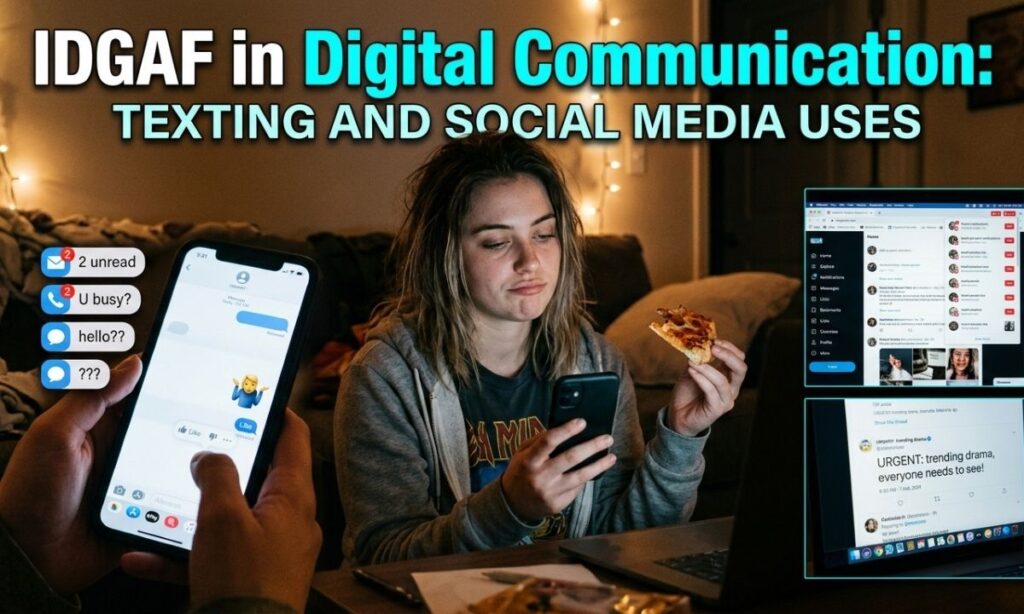
This slang thrives in texting and social media. It’s fast, sharp, and gets the point across instantly.
Here are common ways people use it online:
- In captions: “New hair, new energy, IDGAF what you think.”
- In texts: “IDGAF about that drama, honestly.”
- In bios: Dating app profiles use it to signal a no-nonsense attitude.
- In comments: Shutting down criticism with a single reply.
Emojis often ride alongside it to set the tone. A laughing emoji softens it, while a skull emoji makes it feel more serious.
On TikTok and Instagram, it shows up in memes too. Think confident walk-away clips paired with bold captions.
Group chats use it to end pointless arguments quickly. One “IDGAF” can shut a conversation down without extra explanation.
Still, tone matters online. Since there’s no voice or face, IDGAF meaning can come across harsher than intended.
Also Read this Related Post: Rabe Meaning
IDGAF in Music and Entertainment: Cultural References

Music has kept this slang alive for years. Several major artists have released songs using this exact title.
| Artist | Song Title | Year |
|---|---|---|
| 2Pac | “I Don’t Give a Fuck” | 1991 |
| Dua Lipa | “IDGAF” | 2017 |
| Nelly | Same title | 2013 |
| Drake ft. Yeat | Same title | 2023 |
| BoyWithUke | Same title | 2022 |
Dua Lipa’s version turned it into a breakup anthem about self-respect. It became one of her most streamed tracks worldwide.
Drake’s 2023 take leaned into a tougher, more detached tone. Each artist gives the same phrase a different emotional spin.
TV shows and movies use the attitude too, even without saying the word outright. Confident, don’t-care characters often embody the IDGAF spirit on screen.
This constant presence in music and pop culture keeps the term relevant. It’s part of why IDGAF meaning still trends years after it first went viral.
The Psychology Behind the IDGAF Attitude
There’s real psychology behind IDGAF meaning and why people adopt this mindset. Often, it’s about protecting mental energy.
Ignoring small, unimportant criticism can lower stress. Choosing not to care about every opinion is a form of emotional boundary-setting.
Psychologists sometimes link this to resilience. People who filter out noise tend to handle rejection better.
But there’s a flip side too. Overusing this attitude might mask deeper avoidance or numbness.
If someone stops caring about everything, not just small stuff, it’s worth checking in. That shift can sometimes point to burnout or emotional withdrawal.
Used in moderation, though, this mindset is healthy. It simply means picking your battles and protecting your peace.
When and How to Use IDGAF Appropriately
Knowing IDGAF meaning is one thing. Knowing when to use it matters just as much. Wrong timing can send the wrong message.
Good times to use it:
- Chatting casually with close friends
- Reacting to minor, low-stakes annoyances
- Adding humor to a lighthearted post
Times to avoid it:
- Work emails or professional messages
- Serious conversations with family
- Situations involving someone’s real pain
Adding an emoji or a short explanation can help soften the tone. That way, people don’t mistake casual indifference for genuine rudeness.
Also, think about your audience. What lands as funny with friends could offend a coworker or relative.
Alternatives and Similar Expressions to IDGAF
Once you understand IDGAF meaning, it helps to know softer alternatives too. If it feels too strong, there are milder ways to say the same thing.
| Expression | Meaning | Best For |
|---|---|---|
| IDC | I don’t care | All-ages texting |
| Whatever | General indifference | Casual chats |
| No big deal (NBD) | Downplaying an issue | Friendly tone |
| Couldn’t care less | Total apathy | British-style slang |
| Meh | Mild disinterest | Quick reactions |
Choosing the right alternative depends on your audience. Family group chats probably call for something softer than IDGAF.
Younger or close-friend circles usually accept the sharper version without issue. It comes down to reading the room before you type.
Wrapping Up
IDGAF meaning boils down to one simple idea: not caring, and saying so directly. It’s blunt, quick, and full of attitude.
From texting to music to social captions, it has become part of everyday online language. It shows up when people want to sound confident, dismissive, or simply done with drama.
Used wisely, it can express healthy boundaries and self-assurance. Used carelessly, it might come across as harsh or dismissive.
Now that you know the full IDGAF meaning, you can use it with the right tone, in the right place, at the right time.
FAQs
What does IDGAF mean?
IDGAF means “I don’t give a f***.” It’s slang for not caring about something.
Is it rude to say?
It can be, depending on who you’re talking to. It’s fine with friends but risky in formal settings.
When did the term become popular?
The acronym spread in the early 2000s with internet chat and texting culture.
What’s a polite alternative?
Try “IDC” (I don’t care) or simply “whatever” for a softer tone.
Can it be used in a positive way?
Yes. Many people use it to express confidence or self-respect, not just anger.
Is DGAF the same thing?
Yes. DGAF just drops the “I” but means the exact same thing.
3 thoughts on “IDGAF Meaning: Definition, Origin & Examples (2026)”