
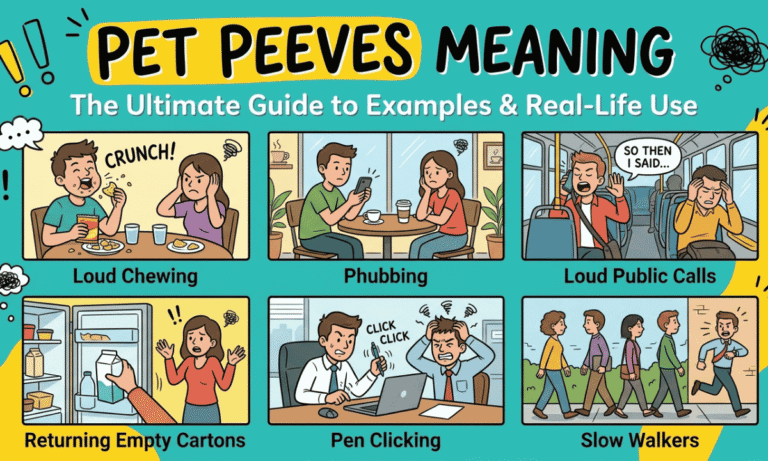
Pet peeves meaning is easy to explain: a pet peeve is a small, repeated habit that annoys you far more than it annoys most people. It could be loud chewing, late replies, or someone talking through a movie.
Everyone has a few. Yet very few people can say why a tiny thing feels so big.
This guide explains the pet peeves meaning in plain words. You will learn the origin, real examples, relationship triggers, and chat samples. You will also see how cultures talk about annoyance and how to reply when someone shares theirs.
Origin & Background of the Term
The word “peeve” comes from “peevish.” That word has meant cranky or ill-tempered since the late 1300s. Over time, people trimmed it into “peeve” and used it as a noun for an annoyance. Most language experts place this shift in the United States, in the early 1900s.
“Pet” adds the personal touch. In older English, a pet was something cherished or favored. So a pet peeve is an annoyance you hold close, almost like a favorite.
The phrase reached a wide audience through a newspaper comic. “The Little Pet Peeve” ran in the Chicago Tribune from 1916 to 1920. It poked fun at thoughtless habits that bother everyday people.
Today, the pet peeves meaning has moved far beyond newspapers. You hear it in podcasts, reels, offices, and group chats.
What Are Pet Peeves Examples
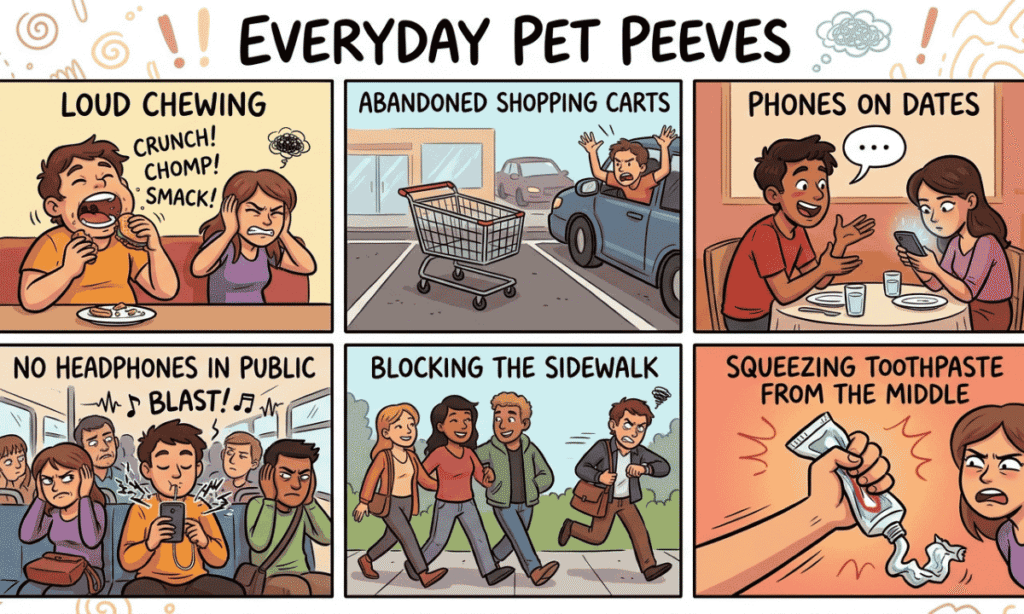
Pet peeves are tiny, specific, and oddly personal. Here are examples people share most often:
- Loud chewing or slurping
- Someone tapping a pen again and again
- Slow walkers blocking the path
- Being left on “seen” with no reply
- Very long voice notes
- People who cut in line
- Interrupting mid-sentence
- Phones at the dinner table
- Reply-all emails
- Typos in formal messages
- Lights left on in empty rooms
Notice something. None of these is dangerous. Still, each one can ruin a good mood.
That gap between small cause and big reaction is the heart of the pet peeves meaning.
Here are two quick sentences that show proper use:
- “My biggest pet peeve is people who never say thank you.”
- “It’s a small thing, but being late drives me crazy.”
What Is Your Pet Peeve

This question pops up on first dates, in job interviews, and across social media. It sounds light, but the answer says a lot about you.
Knowing the pet peeves meaning helps you answer with confidence. Follow these steps:
- Pick something small and real.
- Keep your tone calm.
- Add a short reason.
- Avoid naming a specific person.
Sample answers:
- “Mine is unclear instructions. I like knowing what’s expected.”
- “Clutter. A messy desk makes it hard for me to think.”
- “People who show up late without a text.”
In an interview, choose a work-related answer that shows a strong value. For example, “I dislike missed deadlines without updates.” Avoid anything that sounds harsh or petty.
Why Is It Called Pet Peeve
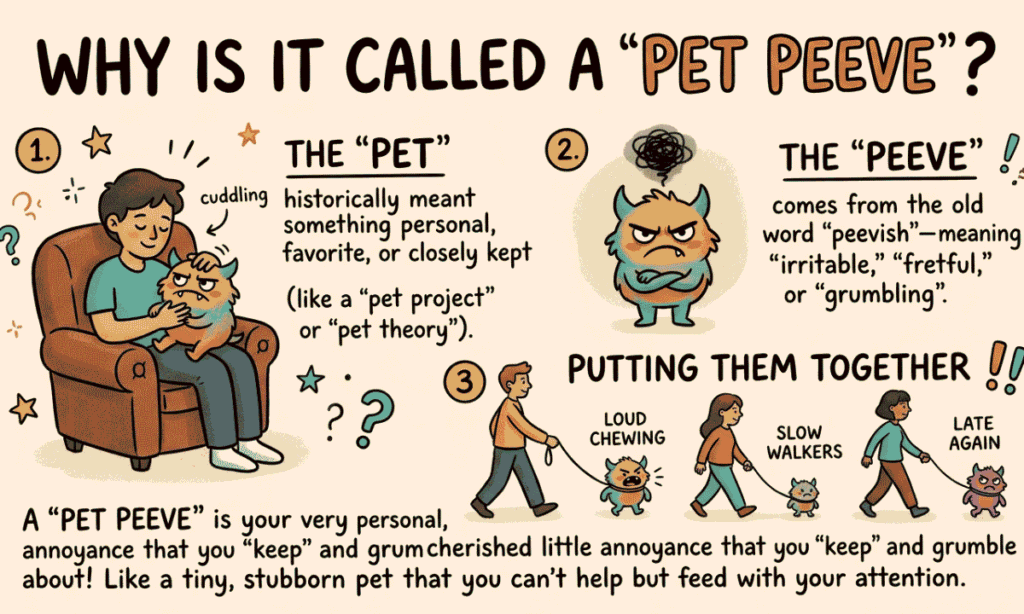
The name combines two ideas. “Pet” means personal and cherished. “Peeve” means annoyance.
Put together, it describes a personal annoyance you keep returning to. Once you see the roots, the pet peeves meaning feels obvious.
It has nothing to do with animals. Some people think it started with misbehaving pets. That is a myth.
English uses “pet” the same way in “pet project” and “pet theory.” Both describe something that belongs to you personally.
Other words carry a similar idea:
- Pet hate or pet aversion (common in British English)
- Bugbear (a lasting source of irritation)
What Are Pet Peeves in a Relationship

Relationship pet peeves are small habits of a partner, friend, or family member that keep irritating you. You spend so much time together that repeats happen daily.
In close bonds, the pet peeves meaning goes a bit deeper. A habit often feels like a message. “You left your towel again” can quietly sound like “you don’t care.”
Common relationship pet peeves:
- Using the phone during a conversation
- Not listening when you talk
- Always running late
- Leaving dishes or clothes around
- Making plans without asking
- Replying very slowly
- Interrupting or finishing your sentences
How to handle them calmly:
- Mention it early, before it builds up.
- Use “I feel” statements instead of blame.
- Pick a calm moment, not a fight.
- Ask about their pet peeves too.
- Agree on a simple compromise.
One warning. If a habit involves disrespect, control, or fear, it is not a pet peeve. That is a deeper problem and deserves a serious talk.
Real Life Conversations (How People Actually Use It)
These short chats show the pet peeves meaning in action. Notice how casual and quick the phrase sounds.
WhatsApp Chat
Sara: You look tense. What happened?
Hina: My coworker keeps talking over everyone.
Sara: Ah, your pet peeve.
Hina: Yes. I can handle noise, but not interrupting.
Here, the phrase works as a quick label. Both people understand it without more explanation.
Instagram DM
Zain: You left my story on seen. Rude 😂
Ali: Sorry! Also, four-minute voice notes are my pet peeve 😅
Zain: Fair. I’ll type it next time.
The tone is playful. The pet peeve becomes a soft, funny way to set a boundary.
TikTok Comments
User 1: Why does nobody talk about people who block the escalator?
User 2: Pet peeve unlocked.
User 3: Mine is people who film strangers without asking.
Comment sections turn pet peeves into shared jokes. People bond over what annoys them.
Pet Peeves Meaning: Emotional & Psychological Side
Pet peeves are rarely about the act itself. They point to values, stress, and unmet needs.
The emotional pet peeves meaning often connects to one of these:
- Respect: Lateness can feel like your time doesn’t matter.
- Control: Mess or chaos can feel stressful.
- Values: Good manners matter more to some people.
- Sensitivity: Some people react strongly to sound, smell, or touch.
- Stress: A tired mind has less patience.
For example, someone who hates interruptions may value being heard. Someone who hates clutter may need order to feel calm.
Pet peeves also grow louder when you are tired, hungry, or stressed. The same habit may not bother you on a good day.
A quick note: strong, painful reactions to sounds like chewing can be a sign of misophonia. That is more than a pet peeve. A doctor can help if it affects daily life.
Usage in Different Contexts
The pet peeves meaning stays the same everywhere. What changes is the tone and the audience.
Social Media
People use the phrase to vent, relate, and start debates. Prompts like “Drop your biggest pet peeve” often get huge replies.
Shared annoyance builds instant connection. That is why creators love the topic.
Friends & Relationships
Friends tease each other about their pet peeves. “I love you, but please stop leaving cabinets open” is a classic.
Used kindly, the phrase prevents silent resentment. It lets you speak up without starting a fight.
Work & Professional Settings
At work, people choose softer words. “One thing I value is clear communication” sounds better than “My pet peeve is messy emails.”
Managers sometimes share their pet peeves to set expectations. Avoid using the phrase to criticize a coworker in public.
Casual vs Serious Tone
Casual: “That’s my pet peeve!” Serious: “This really affects my focus.”
If a habit harms your well-being, drop the light label. Speak plainly and directly instead.
Common Misunderstandings
Many people misread the pet peeves meaning. Here are the most common mix-ups.
Pet peeves are not the same as hate
Hate is deep and lasting. A pet peeve is a surface irritation that usually fades.
You may hate injustice. You merely dislike loud slurping.
They’re not universal
What bothers you may not bother anyone else. One person hates chatting during a movie. Another enjoys it.
That is exactly why the word “personal” sits at the center of the term.
They’re not always logical
Your reaction is often bigger than the harm done. You may know that, and still feel annoyed.
That is normal. Feelings do not always follow logic.
Not everything annoying is a pet peeve
Heavy traffic annoys almost everyone. A pet peeve is specific, personal, and repeated.
Also avoid using the term for serious issues like abuse or discrimination. It makes real harm sound small.
Comparison Table
This table separates the pet peeves meaning from similar terms.
| Term | Meaning | Intensity | Typical Use |
| Pet peeve | A small, personal irritation that repeats | Mild to moderate | Casual talk |
| Annoyance | A general irritation, often shared | Low | Neutral talk |
| Trigger | A strong reaction linked to past pain | High | Sensitive talk |
| Deal-breaker | A limit you will not accept | Very high | Serious choices |
| Preference | Something you simply like more | Neutral | Polite talk |
| Bugbear | A lasting source of irritation | Mild | Casual (UK) |
Key insight: pet peeves sit between a minor annoyance and real emotional discomfort. They are personal, but not extreme.
Variations / Types of Pet Peeves
Pet peeves fall into clear groups. Each type shows what a person values. The pet peeves meaning stays the same across all of them.
| Type | Common Examples |
| Noise-related | Chewing, tapping, loud speakers |
| Social etiquette | Interrupting, skipping thank-yous, line cutting |
| Digital | Seen with no reply, spam tags, autoplay videos |
| Workplace | Vague emails, pointless meetings, reply all |
| Relationship | Not listening, phones at dinner |
| Public behavior | Loud calls, blocking walkways |
| Grammar | Mixing up “their” and “there,” sloppy punctuation |
| Hygiene | Unwashed hands, strong smells |
| Time-related | Lateness, wasted time |
| Driving | Tailgating, no indicators |
Each type reflects personal values more than actual harm.
How to Respond When Someone Uses “Pet Peeve”
Knowing the pet peeves meaning also helps you reply well. A good reply shows emotional intelligence, even if you disagree.
Casual Replies
- “Yeah, I get that.”
- “Everyone has one.”
- “Fair enough.”
Funny Replies
- “That’s oddly specific 😂”
- “Noted. I’ll never chew near you.”
- “Add it to the list.”
Mature / Confident Replies
- “Thanks for telling me. I’ll keep that in mind.”
- “I understand why that bothers you.”
- “Let’s find a middle ground.”
Private or Respectful Replies
- “I didn’t realize that affected you.”
- “I’ll be more mindful.”
- “Can we talk about it later?”
Try not to mock or dismiss the person. A small peeve to you may feel big to them.
Regional & Cultural Usage
The pet peeves meaning is the same worldwide. How openly people share it differs. These are broad patterns, and every person is different.
Western Culture
People often talk about pet peeves openly. They appear on talk shows, in interviews, and in casual chats.
Most see them as quirks, not flaws. Humor is a common way to share them.
Asian Culture
Many communities value harmony. People may hold annoyance in or hint at it softly.
Peeves are often shared with close friends rather than in public. Younger people online are changing this.
Middle Eastern Culture
Respect, hospitality, and family ties shape how people speak. Pet peeves are often shared privately.
Tone and context matter a lot. A polite hint usually works better than a blunt complaint.
Global Internet Usage
Online, the pet peeves meaning has become a shared language. Memes, polls, and “unpopular opinion” posts spread it everywhere.
British English has a close term too: “pet hate.”
Frequently Asked Questions
What is the pet peeves meaning in simple words?
Pet peeves are small habits that annoy a person more than they annoy most others.
Are pet peeves bad?
No. They are normal and human. They only become a problem when they hurt relationships.
Can pet peeves change over time?
Yes. Age, stress, and your environment can all change what bothers you.
Is it rude to share a pet peeve?
Not if you stay calm and kind. Tone and timing matter most.
Do pet peeves reveal personality?
Often, yes. They reflect your values, needs, and sensitivities.
Can couples have pet peeves about each other?
Yes. Talk openly and agree on small compromises.
What is a common pet peeve?
Loud chewing, lateness, and interrupting are among the most common.
How can I deal with my own pet peeves?
Notice the trigger, take a breath, and decide if it is worth mentioning.
Conclusion
Understanding pet peeves meaning is not just about vocabulary. It is about people.
Pet peeves reveal emotions, highlight values, and show how we react to small discomforts. They are not flaws. They are signals.
When you grasp the pet peeves meaning, you listen better, react calmer, and build stronger connections. Next time someone says “That’s my pet peeve,” you will know what they mean and why it matters.
1 thought on “Pet Peeves Meaning: Best Guide to Examples & Real Life Use”