
The Blue Heart Emoji 💙 is one of the most misunderstood symbols in modern texting. You see it pop up in a chat, and suddenly you’re wondering what your friend, partner, or crush is really trying to say.
Is it love? Is it just friendship? Or is it something in between?
This guide breaks down everything you need to know about the Blue Heart Emoji its history, its real meaning, how it differs from other hearts, and exactly when to use it. By the end, you’ll never second-guess a 💙 again.
The Origins of the Blue Heart Emoji
The Blue Heart Emoji first appeared in 2010 as part of Unicode 6.0. It joined the official emoji keyboard in 2015, alongside several other colored hearts.
Since then, it has become one of the most-used emojis on iOS, Android, WhatsApp, and Instagram. Each platform renders it slightly differently, ranging from a deep navy shade to a brighter sky blue.
Long before it went mainstream, autism awareness communities adopted the blue heart as a symbol of support. That link between blue and quiet solidarity still shapes how people use the emoji today.
Over the past decade, its meaning has widened. It now touches everything from friendship to fandom to corporate branding.
What the Blue Heart Symbolizes: Core Meanings
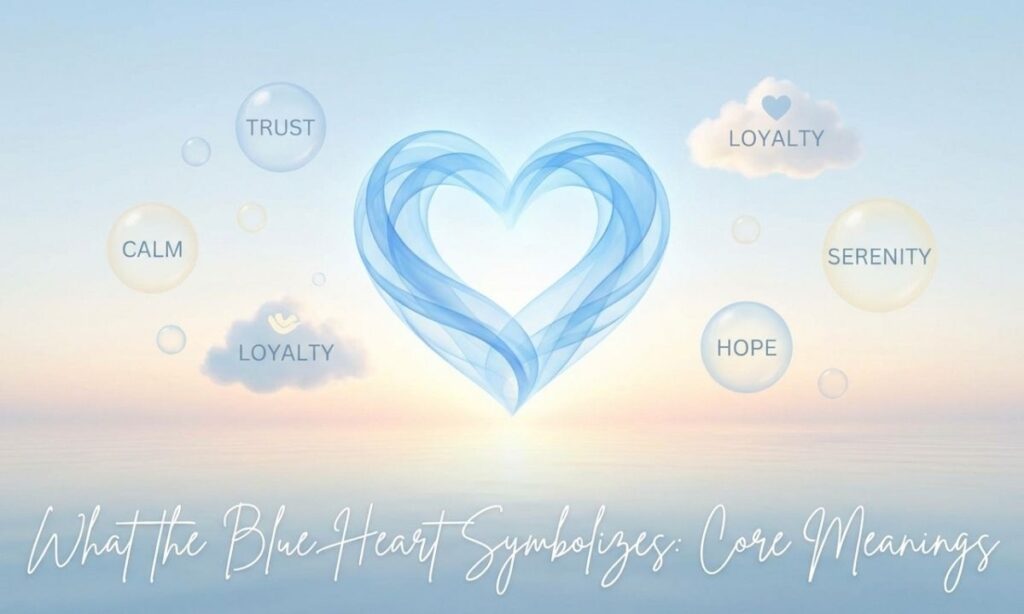
At its core, this emoji represents calm, dependable emotion. It’s less about fireworks and more about steadiness.
Because of that, people often reach for it when words alone feel too small. A single 💙 can carry more weight than a long paragraph.
Here’s a quick breakdown of what it typically signals:
| Meaning | Common Context |
| Trust and loyalty | Close friendships, long term bonds |
| Calm reassurance | Comfort messages, emotional support |
| Platonic affection | Friends, family, coworkers |
| Team spirit | Group chats, sports fandom |
| Awareness and solidarity | Autism awareness, anti bullying causes |
| Brand reliability | Corporate posts, customer messages |
Unlike louder emojis, it doesn’t try to grab attention. It quietly says, “I’m here, and I mean it.”
Trust, Loyalty, and Calm: The Emotional Core
Color psychology plays a big role in how this emoji feels. Blue is tied to stability, honesty, and peace.
That’s why it reads as sincere rather than showy. When someone sends it, they’re usually saying, “I trust you” or “I’ve got you.”
It fits naturally into supportive conversations. Think encouragement, solidarity, or a simple check-in after a hard day.
Compare that to a red heart, which usually carries romantic intensity. The blue version feels calmer, steadier, and less demanding.
It also works well in longer, harder conversations. When a friend is venting or working through something heavy, a well-placed 💙 signals presence without pressure.
What Is the Difference Between a Red Heart and a 💙?
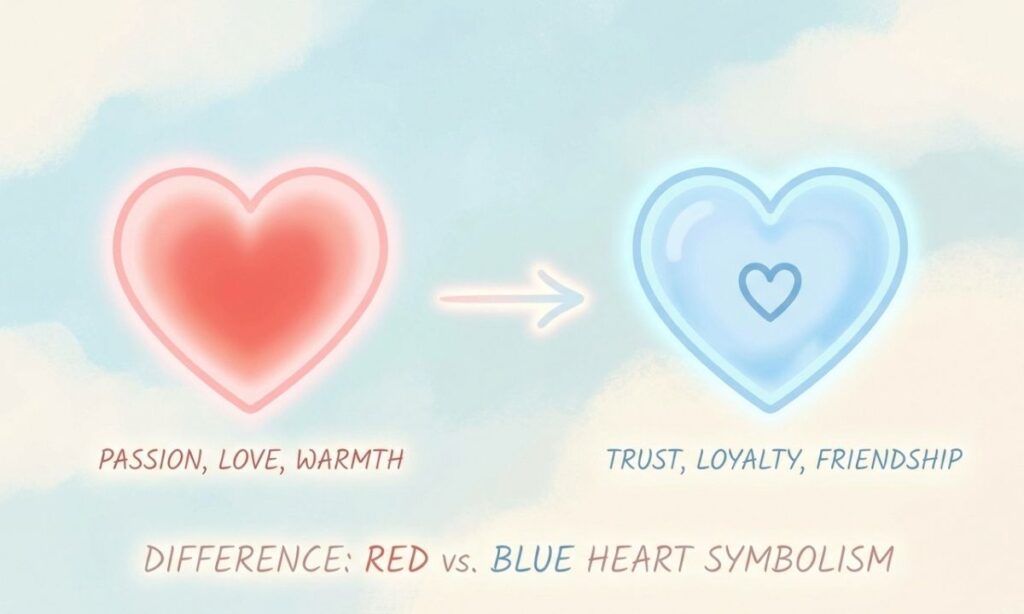
The red heart ❤️ is the emoji of romance. It signals passion, deep love, and strong emotional attachment.
This emoji works differently. It leans toward friendship, trust, and quiet support rather than romantic intensity.
Here’s a simple side-by-side comparison:
| Feature | Red Heart ❤️ | Blue Heart 💙 |
| Primary tone | Romantic, passionate | Calm, platonic |
| Best used for | Partners, crushes | Friends, family, causes |
| Emotional intensity | High | Steady and low key |
| Common setting | Romantic texts, Valentine’s Day | Support messages, group chats |
If someone swaps a red heart for a blue one in a romantic conversation, it’s often intentional. It usually signals a shift toward a more platonic tone.
Does 💙 Mean Friendzone?
This is one of the most searched questions about the Blue Heart Emoji, and the answer isn’t always simple.
In some cases, yes. People use the blue heart as a gentle way to say “I care about you, just not romantically.”
It’s seen as a softer alternative to an awkward conversation. Sending 💙 instead of ❤️ can quietly set a boundary without confrontation.
That said, context always matters. A blue heart from a longtime friend rarely means the same thing as one from a new romantic interest.
If you’re unsure, look at the full conversation. One emoji rarely tells the whole story on its own.
Is the Blue Heart Romantic?

Generally, no. The Blue Heart Emoji leans platonic far more often than romantic.
It can still appear in romantic relationships, but usually to express steady devotion rather than passion. Think “I trust you completely” rather than “I’m obsessed with you.”
Couples in long-term, secure relationships sometimes prefer the blue heart over the red one. It reflects comfort and consistency rather than intense longing.
But as a default reading, most people interpret it as friendly, supportive, and non-romantic.
It’s worth noting that meaning can shift with the relationship’s history. A couple who started as close friends may keep using 💙 even after things turn romantic, simply out of habit.
Blue Heart Meaning by Gender
From a Guy
When a guy sends this emoji, it often signals respect or brotherly support. It’s common in group chats or after celebrating a friend’s win.
Many men use it specifically because it feels warm but not romantic. It avoids any confusion about intent.
If a guy consistently sends 💙 instead of ❤️, it may hint at a platonic view of the relationship. Still, always weigh the rest of the conversation.
From a Woman
Women often use this emoji to express appreciation, encouragement, or emotional reliability. It’s a favorite in group chats celebrating shared wins.
It frequently shows up when someone wants to say “I’m proud of you” without any romantic undertone.
Compared to a red or pink heart, it feels more grounded and less loaded with expectation. Many women also pair it with encouraging captions on social media, especially during milestones like graduations or new jobs.
When and How to Use the Blue Heart Emoji
Friendly Support
Use it when someone needs steady encouragement. A simple “You’ve got this 💙” works well without feeling overwhelming.
Friends & Family
It’s ideal for warm, non-romantic love. Try it with siblings, cousins, or parents: “So proud of you 💙”
Group Chats
In team settings, it reinforces unity. “Great job, everyone 💙” celebrates the group without singling anyone out.
Causes & Campaigns
This emoji is a go-to symbol for autism awareness, anti-bullying campaigns, and healthcare appreciation posts. It signals collective care and solidarity.
Brand Communication
Companies use it to project trust and reliability. It softens corporate messaging without sounding overly casual, especially in customer service replies.
Social Media Vibes
On Instagram, TikTok, and X, it shows up in bios and captions to signal calm energy or loyalty to a fandom, team, or aesthetic. Many creators also use it as a subtle branding element to match a cooler color palette.
Blue Heart vs. Other Heart Emojis: Key Differences
| Emoji | Color | Primary Meaning |
| ❤️ Red Heart | Red | Romantic love, intense emotion |
| 💙 Blue Heart | Blue | Trust, loyalty, platonic bond |
| 💛 Yellow Heart | Yellow | Happiness, warm friendship |
| 💚 Green Heart | Green | Nature, growth, gratitude |
| 💜 Purple Heart | Purple | Compassion, admiration |
| 🖤 Black Heart | Black | Dark humor, grief |
| 🩵 Light Blue Heart | Light blue | Playful calm, softer than 💙 |
The light blue heart is newer and often used as a gentler, more playful cousin of the classic blue heart.
Blue Heart in Action: Real-Life Examples

Here are a few natural ways people use it day to day:
- Supporting a friend: “I know it’s been rough. I’m here. 💙”
- Team spirit: “Big game tomorrow we’ve got this. 💙”
- Celebrating friendship: “Ten years strong, wouldn’t trade it. 💙”
- Awareness posts: “Today is Autism Awareness Day 💙 let’s listen and include.”
- Brand trust: “Thanks for trusting us with your data. 💙”
- Comforting a coworker: “Rough week for everyone. Proud of how we handled it. 💙”
Different Symbolism: Blue in the Wider World
The meaning of this emoji borrows heavily from what blue represents culturally.
- Water and depth: Oceans, rivers, and rain often connect to blue-themed posts about travel or marine life.
- Winter and cool tones: Blue’s visual coolness fits naturally with winter content.
- Peace and spirituality: Many cultures link blue with calmness and inner trust.
- Sports loyalty: Fans of blue-colored teams use 💙 as a badge of pride and belonging.
These associations all feed back into why the emoji feels steady, trustworthy, and calm.
Even outside digital chats, blue shows up in logos, uniforms, and flags tied to trust and reliability from healthcare brands to financial institutions. That real-world pattern is part of why the Blue Heart Emoji translates so naturally into a symbol of dependability online.
Read More Dp Mean
Frequently Asked Questions
Does the Blue Heart Emoji mean romantic love?
Not usually. It mainly signals trust, loyalty, and platonic connection rather than romance.
Does a blue heart from a guy mean friendzone?
It can, but it’s not guaranteed. Look at the full conversation before assuming intent.
What’s the difference between 💙 and 🩵?
They’re similar, but 🩵 feels lighter and more playful, while 💙 feels deeper and steadier.
Can I use the Blue Heart Emoji at work?
Yes. It’s one of the safer heart emojis for professional messages since it feels warm but not intimate.
Does the Blue Heart Emoji mean sadness?
Not directly, though it can carry a calm, reflective tone in tribute or condolence messages.
Is the Blue Heart Emoji gender-specific?
No. It’s used inclusively across all genders and age groups.
Conclusion
The Blue Heart Emoji is far more than a simple color choice. It’s a quiet symbol of trust, loyalty, and platonic care that shows up everywhere from group chats to global awareness campaigns.
While it can occasionally carry a friendzone hint or a calm romantic undertone, its default meaning stays steady: support without drama.
Next time you send or receive a 💙, you’ll know exactly what it’s saying and exactly how to respond.
2 thoughts on “What Does the Blue Heart Emoji Mean? Easy guide”